
Beauty Is Skin-Deep; Structure Is Permanent
Italian marble, branded wall putty, and concealed ambient LED lighting can easily disguise compromised structural concrete. While cosmetic finishes can be upgraded at any time over the life of an apartment, the reinforced concrete framework and brick masonry cannot be replaced.
For prospective homebuyers in coastal Visakhapatnam, conducting a technical materials check is the single most valuable safeguard against structural distress, spalling concrete, and damp walls.
1. Structural Steel: Fe 550D Primary TMT Rebar
Never accept re-rolled or unbranded scrap steel. In coastal environments, steel bars undergo aggressive chloride exposure:
- Approved Primary Producers: TATA Tiscon, SAIL, JSW Neosteel, RINL (Vizag Steel).
- Grade Standard: Fe 550D conforming to IS 1786:2008.
- Corrosion Resistance: Ask whether the developer uses CRS (Corrosion Resistant Steel) or applies anti-corrosive cement-polymer slurries during column casting.
2. Cement Grades: OPC 53 vs PPC
A reputable builder uses different cements for different applications:
- Structural RCC (Columns, Beams, Slabs): 53 Grade OPC (Ordinary Portland Cement) from top-tier plants (UltraTech, ACC, Ramco) to ensure high initial strength and rapid formwork striking times.
- Brick Masonry and Internal Plastering: PPC (Portland Pozzolana Cement) with fly-ash blending, which produces lower heat of hydration and significantly reduces surface micro-cracking.
3. Sand Selection: River Sand vs Certified Manufactured Sand (M-Sand)
With stringent environmental bans on unregulated riverbed mining, high-grade Zone-II M-Sand (Manufactured Sand produced via vertical shaft impactors) has emerged as the engineered gold standard:
- Zero Silt Content: Natural river sand often contains 8% to 15% clay and decayed organic silt, which weakens cement bonding and causes plaster peeling.
- Graded Particle Distribution: Machine-cubical M-sand interlocks tightly, yielding denser, virtually waterproof concrete.
Civil Quality Audit: 5 Questions to Ask at the Construction Site
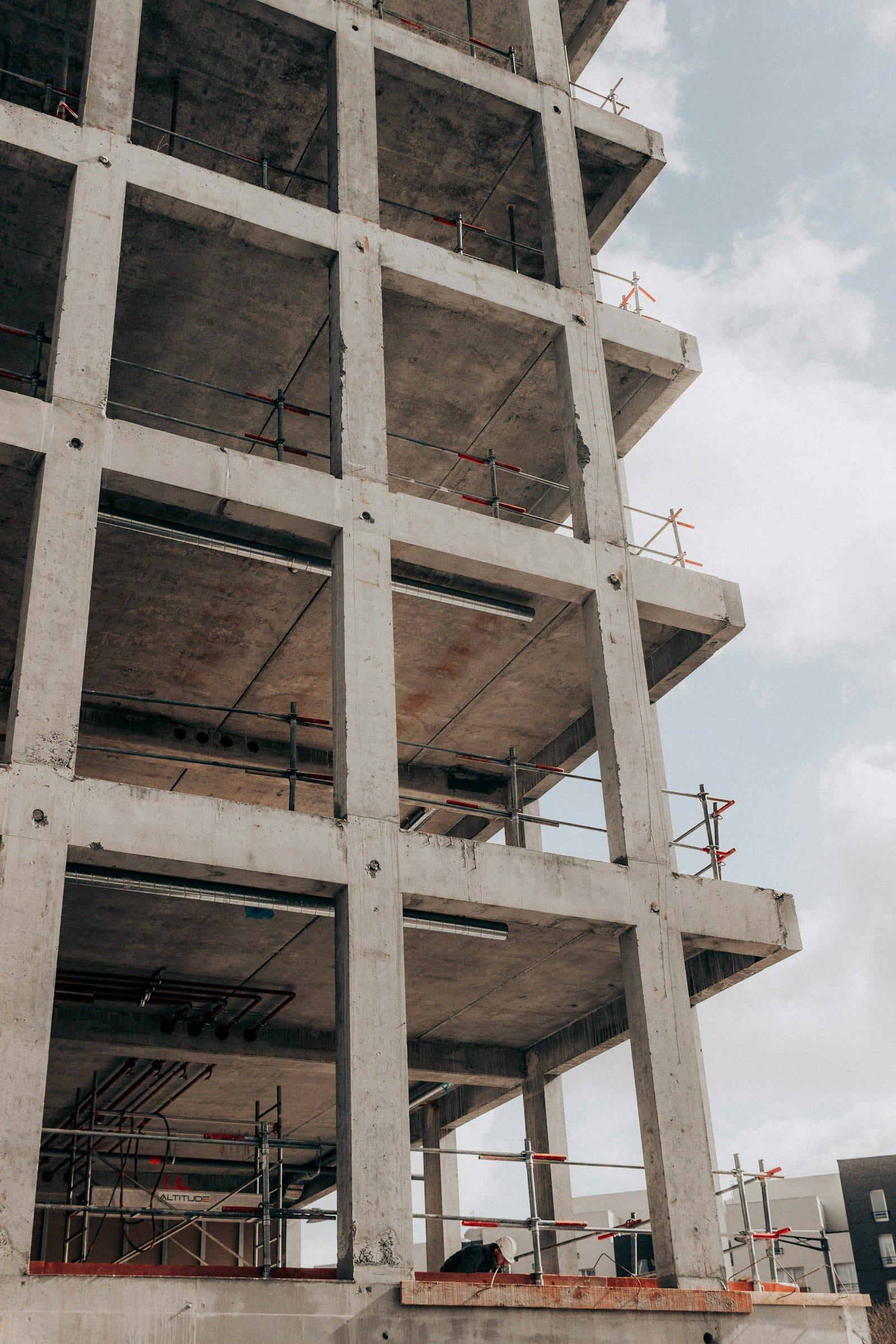
- What is the design concrete grade for structural columns? (Should be minimum M25 or M30 for 5-storey RCC frames).
- Are you using Ready-Mix Concrete (RMC) with automated batching or manual hand-mixers?
- How many days is curing performed on cast concrete slabs? (Mandatory minimum 14 days with continuous water ponding).
- What cover block material is used to maintain steel rebar clearance? (Engineered concrete cover blocks, never scrap stone chips).
- Are cube compressive test registers maintained on-site with NABL lab certifications?
- •IS 1786:2008 - High Strength Deformed Steel Bars for Concrete Reinforcement — Bureau of Indian Standards
- •IS 269:2015 - Specification for 33, 43 and 53 Grade Ordinary Portland Cement — BIS
- •IS 383:2016 - Coarse and Fine Aggregate for Concrete — BIS
Frequently Asked Questions
The 'D' in Fe 550D stands for 'Ductility'. It possesses a higher percentage of elongation (minimum 16%), allowing building frames to absorb seismic tremors and cyclonic wind shear without brittle fracture.
Discuss This Guide With Our Engineering Desk
Have questions about floor plan efficiency, material standards, or RERA approvals in Visakhapatnam? Connect directly with our senior civil engineering team.